Editorial
Preface 2023
Preface – magazine 2023 A contemporary magazine feeds upon dynamism and vigour. It instantly perceives the inputs deriving from the readers and evolves, offering its best at...
Filter by Category
Preface – magazine 2023 A contemporary magazine feeds upon dynamism and vigour. It instantly perceives the inputs deriving from the readers and evolves, offering its best at...
Italy is not a Country you simply “eat”, it’s a Country that you “perform” at the table. Each gesture in the kitchen, during a celebration, is not a modest, culinary action, but...
The magic of a place between history and the present day By Nicoletta Arbusti On the sixth floor of the historic The Excelsior, a Luxury Collection Hotel – Marriott in...
What does a dish with a Ligurian name have in common with Arab and Asian roots and a genuine Neapolitan culinary tradition? Genoese Tria is not a simple dish: it’s an aggregate of...
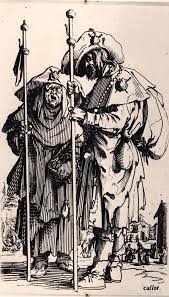
Food, charity, and community in the Middle Ages and the Renaissance Florence, between the thirteenth and sixteenth centuries, was not only the city of merchants, bankers, and...
One does not live by bread alone, it is true; one also needs the side dish, and the art of making it cheaper, tastier, and healthier, I say and maintain, is true art. Let us...
A man who has not been in Italy is always conscious of an inferiority, from his not having seen what it is expected a man should see. (Samuel Johnson). The journey to Italy was a...
Il pellegrinaggio a Roma, noto come Giubileo, ha rappresentato per secoli un momento di profonda spiritualità e devozione. Nel Medioevo erano chiamate vie romee le strade che i...
In the first century of the Common Era, the Roman Emperor Claudius, who ruled from 41 to 54 AD, was a passionate scholar of the Etruscans. He published, in the Greek language, a...
What would we need one day if everything goes awry? Gold, oil, diamonds? The answer could be different and, in a certain way, unexpected: seeds. Small but essential, vital for us....
Around the mid-fifth century BC, the famous Greek historian Herodotus of Halicarnassus visited Egypt. Later, when he wrote the celebrated Histories, he dedicated the entire second...


Italy is not a Country you simply “eat”, it’s a Country that you “perform” at the table. Each gesture in the kitchen, during a celebration, is not a modest, culinary action, but a form of resistance against oblivion, a hierarchy that fuses theology with seasonality. We are not talking only about recipes, but about community grammar that transforms dogma into living material. Following the cycle of the year, we discover that our most profound story is not written in archives, but in the fire we light up following the Calendar of Saints and the ancient traditions that have shaped our tastes.
Winter: the time of broth and purification
The sacred gastronomic year opens with the harshness of cold weather, where devotion asks for substance. Northern Italy, in this sense, is a master. On 7 December, Saint Ambrose in Milan inaugurates the winter cycle with the casoeula: savoy cabbage embraces the less noble cuts of pork in a recipe that speaks of the farmer’s pragmatic religion, which produces no waste and transforms the animal’s sacrifice into a sort of protective banquet against the harsh frost.
Christmas, in the North of Italy, is a triumph of the “liturgy of boiled meat”. Broth is not just a simple liquid; it is the ritual union of an old hen, beef, and capon. The latter, historically a noble meat, is at the centre of the domestic rite that requires much patience. In Bologna, the custom of tortellini in broth for Saint Petronius transforms the kitchen into a collective laboratory of solidarity. In the dead of winter, the Italian-Jewish tradition gifts us instead with the giudìa artichoke: its perfect frying, which happens exactly when the Romanesco artichoke production is at its peak, is an act of devotion towards the festivities of the Jewish calendar, uniting the mastery of regional frying to the thousand-year-old history of the Roman community.
Around mid-January, the cycle closes with Saint Anthony the Great. In the countryside, the butchery tradition, after its blessing, becomes the foundation for the yearly sustenance: food turns into an amulet, a promise of survival that spans generations.
Spring: the awakening and the breaking of the fast
Lent is the time of silence, which explodes during Easter holiday when the architecture of the pasta reaches engineering heights. In Lazio and Umbria, Easter is characterised by the Pizza di Pasqua (Easter Cheese Bread), a monument that requires hours of leavening. Eating it at breakfast on Easter morning is the domestic Eucharist that breaks the fasting, a heritage that brings the entire community together.
In Liguria, the Torta Pasqualina, in its canonical formulation, requested 33 layers of puff pastry (one for each year of Christ’s life): it is proof that the sacred needs time and labour. In Naples, the Casatiello (Neapolitan Easter Bread) features a boiled egg, a symbol of life that breaks the shell, inside a cross-shaped pastry that evokes the suffering, resolved in an explosion of convivial joy. In Calabria, the banquet of ‘u cumbitu (lagane – a wide handmade pasta – with chickpeas) for San Joseph closes the Lent season with a gesture of pure solidarity: it is the celebration food as an altar of charity and mutualism. In these times, we cannot overlook the contribution of Italian Jewish cuisine; with its dishes featuring bitter herbs and the ceremonial preparation of flour, it has profoundly influenced our Eastertime traditions across many central regions of our country, suggesting that the taste of freedom and rebirth shares deep, common roots.
Summer: fire and light
Summer is the time of the Saints who converse with the earth and the sun. On the 24th of June, Saint John the Baptist brings the alchemy of Saint John’s Water. The dew gathered during the solstice night, used to water the herbs such as smartweed, is not a folkloristic mannerism; it is an act of purification. That herb, infused with “aromatic power”, becomes the soul of revitalizing soups for the Florentine calcio storico players, blending magic, medicine, and theology.
Then, on 10 August, Saint Lawrence arrives. In Florence, the bond between martyrdom and fire takes place in the embers. If the legend of the Medici’s “Beef steak” has become the founding myth, the fire that roasts the meat is a purifying element, a collective practice that transforms the Saint’s pain into a town festival. It is not just meat, it’s the celebration of men who tame the sacred element to nourish themselves. In Rome, the same cult has inspired the tradition of eating grilled meats on the evening of the 10th, a tradition that connects the Christian martyrs’ history with the vitality of the Roman people.
Autumn: coming full circle
Autumn is the time of gratitude. Saint Michael the Archangel (29 September) marks the conclusion of the grain harvest. In many areas of the South, the eating of blessed votive bread, shaped like swords or scales, seals the protection of future sowings.
In Tuscany, the holiday of St Martin (11 November) celebrates the “tree of bread“: the chestnut. Here, devotion moves from the cathedrals to forests. Chestnuts and good wine become the protagonists of a gratitude towards Mother Earth that has saved entire generations from famine. It is a moment when a community gathers around a fire, knowing that time is not linear but a perfect circle that repeats itself every year.
The sacredness of patience
What unites the Northern broth, the pizza al formaggio of central Italy, and the Sicilian “virginedda” — when they offer 13 dishes in honour of Saint Joseph — is the solemnity of the gesture. We are not talking about recipes from glossy magazines, but about a quiet form of resistance. The liturgical calendar has prevented time from becoming linear, keeping it instead circular: a cycle of returns, periods of abstinence, and the breaking of fasts.
In Abruzzo, the cult of Saint Dominic in Cocullo, with its ciambellani (the sacred ring bread) distributed to the believers, reminds us that food can become an amulet, fusing together a peasant religiosity deeply imbued with magic and the official liturgy. In Veneto, the devotion to the Madonna di Monte Berico, through the painstaking preparation of the Vicenza-style salted codfish (baccalà alla vicentina), shows how a foreign product can become a sacred totem. While in Lazio, the Sagne of Santa Vittoria (curled tagliatelle) in the Rieti area, distributed for free in big steam kettles during patron-saint celebrations, represent the essence of spiritual communion: eating the same pasta means becoming part of the same invisible community.
When we cook these dishes—when we wait for the dough to rise for three days or until the broth clarifies—we honour an invisible contract with those who came before us. In a world quick to embrace the ready-to-eat, the sacred resides precisely here: in refusing to rush, performing a ritual not fully our own but one that defines us. In Italy, the sacred is found in safeguarding the flavour of memory. One need not adhere to dogma to honour these dates; simply cooking, knowing every bite serves as a bridge to the eternal, suffices. In this way, Italy remains a vast open-air monastery, where every table is an altar and all meals—if prepared with the proper unhurried pace—become a form of secular prayer. It is a seamless blend, where Christian, Jewish, and peasant traditions merge in the aromas of a cuisine rooted in memory.